Cataract
Medical review pendingCataract Lens Choices: What “Less Dependence on Glasses” Really Means
Understand common cataract lens categories, the trade-offs they involve and why the right choice depends on measurements, eye health and visual priorities.
Published
Start with the visual goals
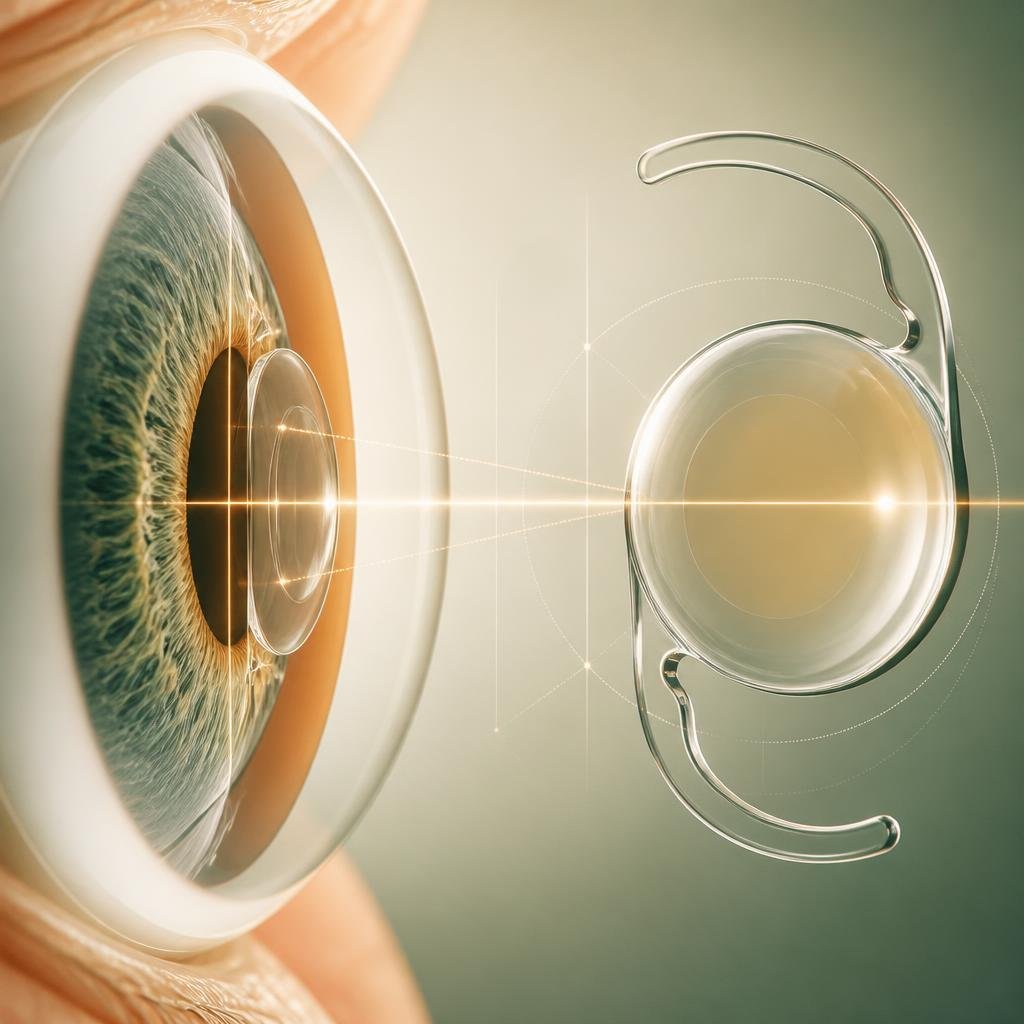
An intraocular lens (IOL) replaces the cloudy natural lens during cataract surgery. Lens choice is not a simple ranking from basic to best. It is a discussion about the distances you would like to see clearly, how much you are comfortable using glasses, what visual side effects matter to you, and what the measurements show.
A monofocal lens is usually planned to focus at one main distance. Glasses may still be needed for other tasks. Other lens designs aim to provide a broader range of focus, but they may not suit every eye and can involve trade-offs such as halos or reduced contrast. Ask the surgeon to explain the likely outcome for your own measurements rather than relying on a label or advertisement.
Measurements and eye health matter
Biometry estimates the eye dimensions used to calculate lens power. Corneal shape, previous refractive surgery, tear-film quality and other eye conditions can affect measurements or visual expectations. The clinician may repeat a measurement if the surface is unstable or the result does not fit the rest of the examination.
Retinal, optic-nerve or corneal disease can limit vision even when the cataract is removed successfully. Discuss existing conditions and previous eye procedures before choosing a lens.
Questions to ask before deciding
Ask which lens options are suitable for your eyes, what distance each option is intended to prioritise, whether glasses are likely for reading or distance, and what visual effects are possible. Ask whether astigmatism changes the options and how follow-up is arranged.
Take time to compare benefits, limitations, costs quoted by the hospital and your personal priorities. A lens decision should follow an eye examination and informed discussion; no particular IOL is right for everyone.
Quick answers
No. Glasses may still be needed, and results depend on eye measurements, health and healing. Ask for realistic expectations for your own case.
No. Suitability depends on the eye examination, measurements, other eye conditions and the patient’s priorities.
No. Discuss what it is designed to do, its trade-offs, and how those apply to your eyes and visual needs.