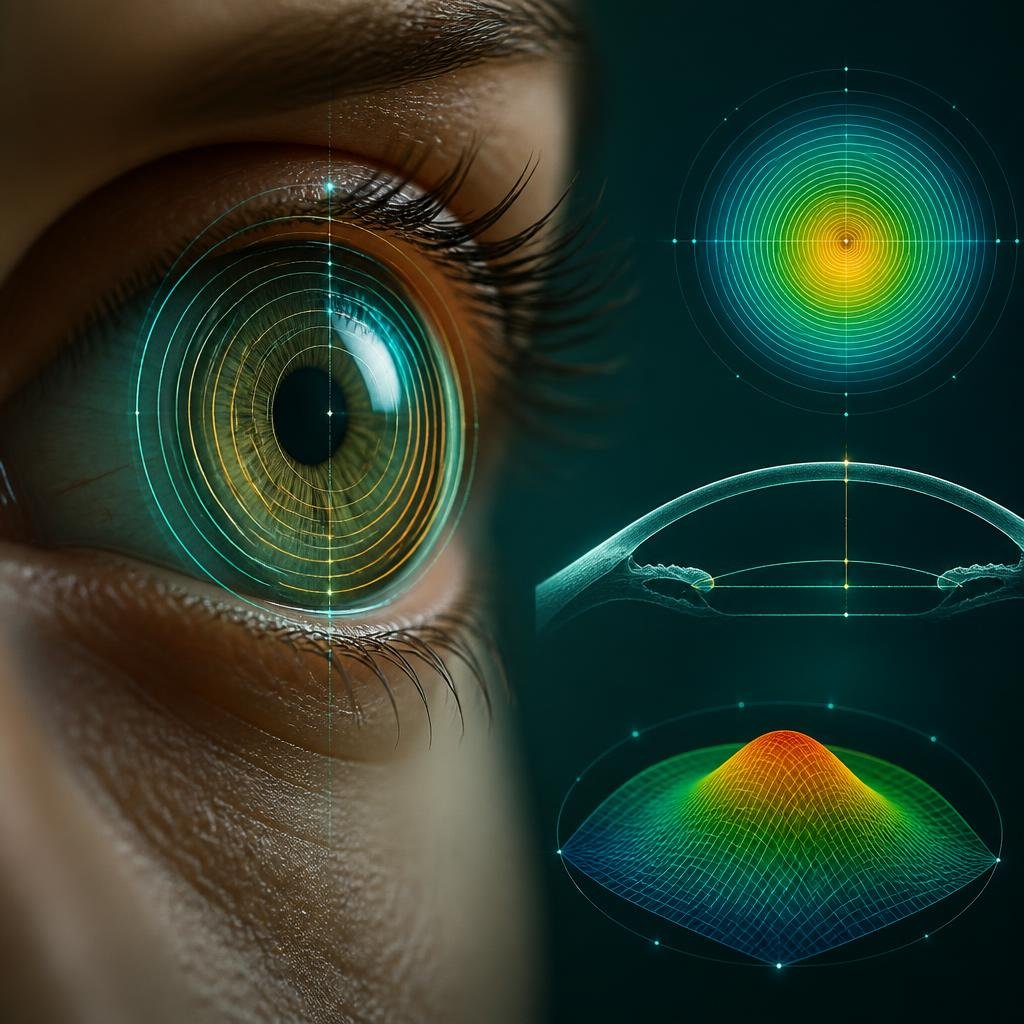
What does the scan measure?
Topography maps the curvature of the cornea across its surface. Tomography can also estimate the cornea’s shape through its depth and provide information such as thickness distribution, depending on the device. Different instruments use different methods, so measurements from different machines may not be directly interchangeable.
The clinician interprets the maps alongside refraction, slit-lamp examination, symptoms and any earlier scans. A colour pattern alone should not be used to diagnose a disease or decide on surgery.
When might an eye doctor request it?
A scan may help assess suspected keratoconus, changing or irregular prescriptions, corneal shape before refractive surgery, or corneal shape for selected contact lenses. Whether it is needed depends on the clinical question and what previous examinations show.
For monitoring a condition, the doctor may compare scans taken over time. Similar testing conditions and review of the raw measurements help make that comparison more meaningful.
How to prepare for a corneal scan
Bring your glasses, prior prescriptions, corneal maps and contact-lens details if you have them. Contact lenses can temporarily affect corneal measurements; ask the clinic whether and for how long to stop wearing your lenses before the test. The timing depends on lens type and the reason for the scan.
Ask what the test is intended to answer and whether the result changes your care plan. A scan is generally quick and non-invasive, but exact instructions depend on the equipment and the rest of the examination.